Whether you’re having a wedding of 200 people or 20, it can feel like a nearly impossible task deciding who you should (and shouldn’t) invite. In fact, I know a lot of couples who have decided to elope because the pressure of the guest list was driving them mad…and I can see why! You might feel pressure from your parents, future in-laws, siblings, friends, and even co-workers to invite guests you either don’t know very well or haven’t seen in ages.
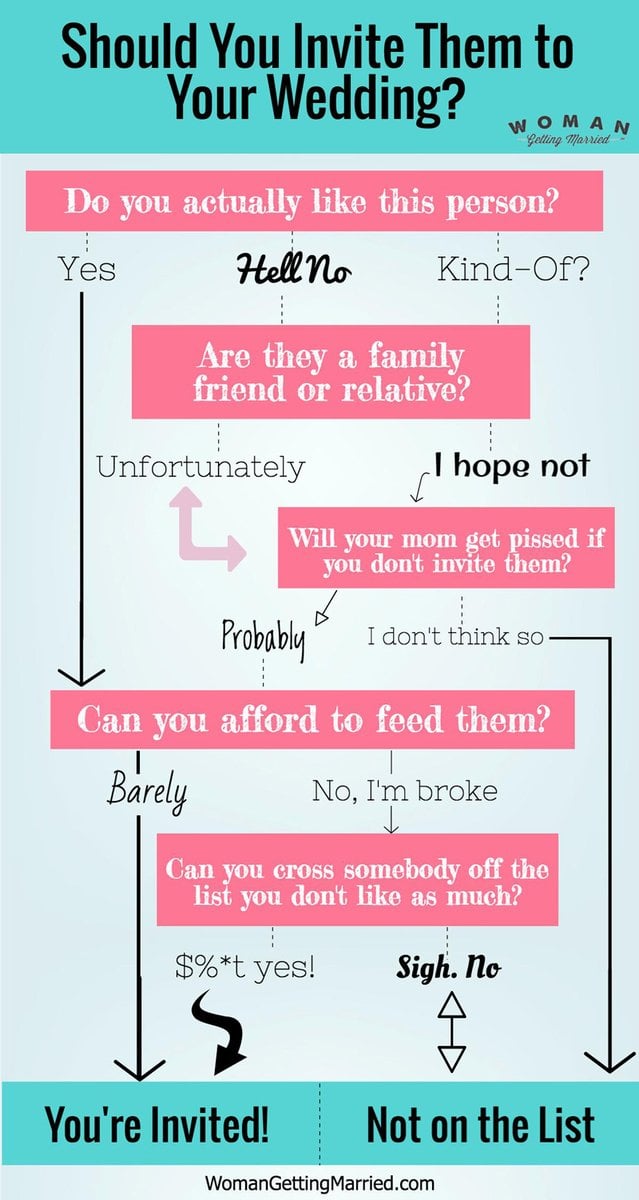
We thought we’d have a little fun helping you decide who makes the cut and who you can cross off, with the flowchart below. And even if it doesn’t have a super serious tone, we 100% agree that you should decide your guest list using these same questions! 😉
The guest list also happens to be the thing that drives your whole budget, even though nobody really talks about it that way. The average couple invites about 117 guests and spends around $292 on each one (we know, ouch!), so every little “should we invite them or not?” is basically a $300 decision. That’s a lot riding on one spreadsheet! So we like to start with the fun flowchart, then back it up with an actual plan, and we’ve got both for you right here.
Start With Your Number Before You Start With Names
The biggest guest-list mistake we see is couples building their list of people first and figuring out the budget second. We always flip that. Pick your maximum number first and let that number do the saying-no for you, so you’re not the bad guy in every conversation.
Your cap comes down to three things: what your venue actually holds (the comfortably-seated-with-a-dance-floor number, not the fire-code number), what your budget covers once you divide it by your per-guest cost, and how big a crowd you want. Go with whichever of those is smallest, because that’s your real ceiling whether you like it or not! If you need help landing on that number, we walk through it in how many people should I invite to my wedding.
Smart move: Build in a buffer for the people who won’t come. Not everyone you invite will say yes, so a list that’s slightly over your target usually lands right on it. We break down what a realistic yes rate looks like in how many wedding guests to expect.
The Three-Tier List That Makes Cuts Painless
Once you’ve got your number, resist the urge to write one giant list. We’re big fans of writing three instead.
Tier A is your non-negotiables: immediate family, your closest friends, the people you can’t picture getting married without. Tier B is the people you’d love to have if the budget and headcount allow: extended family you’re close with, good friends, the couples you see regularly. Tier C is the “nice but not necessary” group: coworkers, your parents’ friends, the cousin you last saw at a funeral in 2014.
Add up Tier A first. If you’re already bumping up against your cap, well, that’s good to know before anyone’s feelings are on the line! Then add B, then C, until you hit your number and stop. And the cuts kind of make themselves on paper, so you’re not deciding on the spot when your mom asks about her book club. For more ways to trim without the guilt, we love these 5 ways to cut your wedding guest list.
Pro tip: Keep your tiers in a working spreadsheet, not your head or a napkin. A shared doc with columns for tier, address, RSVP status, and meal choice will save you later. We put together a wedding guest list template and rounded up 10 tips for an organized guest list to make this part easy.
Set Your Plus-One Rule Once (Then Don’t Bend It)
Plus-ones are where guest lists balloon out of nowhere, because every “+1” is another $292-ish seat. The cleanest approach is to pick one rule and apply it across the board: married, engaged, and live-in partners get a plus-one, and beyond that it’s at your discretion. Consistency is what keeps it fair, so nobody can point to their cousin and ask why they got one when they didn’t.
What you want to avoid is deciding plus-ones person by person, because that’s how you end up with hurt feelings and a headcount you can’t explain. We get into the full breakdown in wedding plus-one etiquette.
Etiquette tip: Address the invitation to exactly who’s invited. “Ms. Jane Smith” means Jane. “Ms. Jane Smith and Guest” means she can bring someone. Spelling it out on the envelope and the RSVP card heads off the awkward “can I bring my new boyfriend?” text.
The Hard Cases: Coworkers, Kids, Family Obligations, and Exes
The flowchart handles the fun ones. These are the conversations that keep couples up at night.
Coworkers and your boss. You’re not obligated to invite anyone you work with, and the all-or-nothing rule helps here: invite the whole team or none of them, so you’re not creating office drama. If you’re stuck on whether your manager makes the list, we wrote a whole piece on whether you have to invite your boss to your wedding.
Kids. Adults-only is a popular choice, and so is welcoming kids. What matters is that you’re consistent and clear on the invitation. If you do welcome little ones, a dedicated kids’ area earns you happy parents and a calmer reception, and we have kids’ table ideas for that.
Family pressure. This is the big one. You do not have to invite every relative your parents want, but if they’re contributing financially, an open conversation goes a long way. We talk through how to handle that tug-of-war in do you have to invite all your family to the wedding.
Exes. It’s usually a no, but occasionally a yes if you’ve stayed close and your partner is on board. We laid out the whole judgment call in should exes be invited to the wedding.
Watch out for: Don’t fall for the “but they invited us to theirs” guilt. A past invitation is a kind gesture to weigh, not something you’re obligated to repay. If they fall into Tier C and your numbers are tight, it’s okay to send a warm note instead of an invite.
What Happens After the List Is Done
Finishing the list is just step one. A few things make the back half go smoothly. Send save-the-dates only to people who are 100% invited, because once a save-the-date is out, you can’t take it back. Build your A/B/C tiers into your timeline so that if Tier A regrets start coming in, you know exactly who to invite from Tier B and when.
And brace yourself for the RSVP stage, because it tests everyone’s patience. You’ll get the late repliers, the surprise plus-ones, and the cards that somehow never make it back, and it’s all part of the deal. We catalogued the wedding RSVP mistakes that drive brides crazy so you can see them coming. And if word gets out and you start worrying about people showing up who weren’t invited, we put together a guide on how to stop uninvited people from coming to your wedding.
Heads up: Every guest you add is spending their own money to be there too, on travel, a hotel, a gift, and an outfit. Keep in mind how much the average wedding guest spends when you’re deciding who you really want to ask to make that effort.
Frequently Asked Questions
How many people should I invite if I want a certain number to show up?
Invite slightly more than your target, since not everyone will be able to come. Your realistic yes rate depends on how local your crowd is and whether it’s a destination wedding. We break down how many wedding guests to expect so you can plan your invite count around the number you actually want in the room.
Do I have to give everyone a plus-one?
No. The fair approach is one consistent rule, usually that married, engaged, and live-in partners get a plus-one, and everyone else is at your discretion. The full etiquette is in our plus-one guide.
Is it rude to have an adults-only wedding?
Not at all, as long as you’re consistent and you make it clear on the invitation and your wedding website. Address it to the specific adults invited and don’t make exceptions for some kids and not others.
Do I have to invite someone just because they invited me to their wedding?
No. It’s a kind thing to weigh, but it’s not an obligation. If your numbers are tight and they’re not someone you’re currently close to, a warm note is a perfectly gracious alternative.
When should the guest list be finalized?
Before save-the-dates go out, ideally around 8 to 10 months ahead, since save-the-dates can’t be walked back. Keep your tiered list handy so you can fill spots from Tier B as Tier A regrets come in.
Whether you trim to 40 or open it up to 200, the people who love you will be thrilled to be there, and the ones who don’t make the cut will be just fine. We promise.
The couples who stay calm about their guest list just pick a number first and trim by tier from there. If you want a place to keep all of it organized as you go, our Smart Wedding Planner and the ultimate wedding checklist keep your list, budget, and timeline all in one place.
Some links in this post may be affiliate links, which means we may earn a small commission if you make a purchase through them. Thank you for your support!